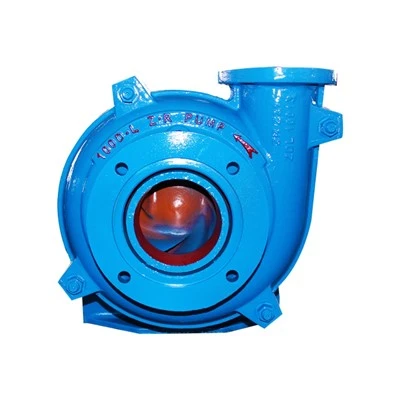
Slurry pumps are critical equipment for conveying highly concentrated, abrasive slurries in the industrial sector. Their structural design directly impacts their operating efficiency and service life. A thorough understanding of their structural characteristics is crucial for optimizing selection and maintenance.
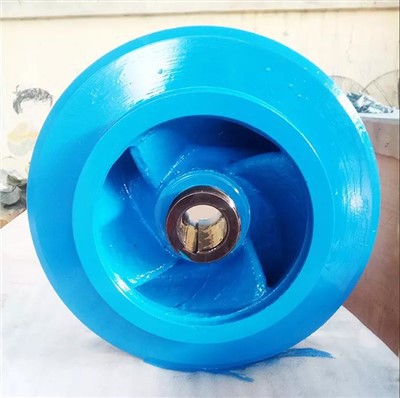
The core components of a slurry pump include the pump body, impeller, guard plate, shaft seal, and bearing assembly. The pump body is typically constructed of a highly wear-resistant alloy or rubber lining to withstand the intense slurry impact. Its flow path design is fluidically optimized to ensure uniform slurry distribution and minimize turbulent losses. The impeller, a key power transmission component, often adopts a closed or semi-open design, typically constructed of high-chromium alloy or wear-resistant composite materials to achieve a balance between wear resistance and hydraulic performance. Under certain operating conditions, auxiliary blades are added to the back of the impeller to reduce axial forces and improve stability.
The guard plate forms a closed flow chamber with the pump body and is in direct contact with the slurry. Its material selection must balance hardness and toughness. Traditional designs utilize replaceable guard plates to reduce maintenance costs, while the recent emergence of adjustable clearance technology has further extended component life. The shaft sealing system is key to preventing leakage. Common configurations include stuffing boxes, mechanical seals, and expeller seals, which can be flexibly selected based on the corrosiveness of the media and the pressure level. For high-lift applications, double-face mechanical seals combined with flushing solutions can effectively improve reliability.
The bearing assembly supports the pump shaft and transmits torque. Heavy-duty bearings are typically used and equipped with a cooling and lubrication system. Some large slurry pumps are equipped with a thin oil lubrication station to ensure stable performance at high speeds. Furthermore, the base and coupling design should consider vibration reduction requirements to reduce the impact of vibration on the system.
Modern slurry pumps tend to be modular in structure, facilitating rapid maintenance and component replacement. Advances in materials science have led to the gradual application of new technologies such as ceramic coatings and polymer composites, further enhancing the equipment's wear resistance. Properly selecting the structural configuration and optimizing operating parameters are key to ensuring the long-term and efficient operation of slurry pumps.
 English
- English
- Français
- Deutsch
- 日本語
- Italiano
- Español
- Português
- русский
- Ελληνικά
- Latviešu
- Gaeilgenah Éireann
- slovenščina
- Norsk
- Polski
- Български
- Việt Nam
- Nederlands
- O'zbek
- اردو
- dansk
- Eesti
- Lietuvių
- slovenčina
- Kreyòl Ayisyen
- Malti
- عربي
- hrvatski
- українська
- Melayu
- עברית
- বাংলা
- Català
- हिंदी
- suomi
- Indonesia
- Türkçe
- 한국어
- magyar
- bosanski
- Cymraeg
- íslenska
- România limbi
- ไทย
- Bai Miaowen
- Svenska
- Čeština
- Srbija jezik (latinica)
- فارسی