

Hey there! As a supplier of Froth Slurry Pumps, I've seen firsthand how crucial impeller design is when it comes to a pump's performance. In this blog, I'm gonna break down how different aspects of impeller design can have a big impact on the overall efficiency and effectiveness of a Froth Slurry Pump.
Let's start with the basics. The impeller is the heart of the pump. It's the part that rotates and creates the force needed to move the froth slurry. The design of the impeller can affect everything from the pump's flow rate to its ability to handle different types of froth slurry.
One of the key factors in impeller design is the number of blades. A pump with more blades can generally handle a higher flow rate. This is because each blade adds to the overall surface area that comes into contact with the slurry, allowing for more efficient transfer of energy. However, more blades also mean more friction, which can lead to increased wear and tear on the impeller and other pump components. On the other hand, a pump with fewer blades may have a lower flow rate but can be more efficient in terms of energy consumption and may experience less wear.
The shape of the impeller blades is also super important. There are different blade shapes available, such as backward-curved, radial, and forward-curved. Backward-curved blades are commonly used in Froth Slurry Pumps because they offer a good balance between efficiency and stability. They help to reduce the amount of energy lost due to turbulence and can handle a wide range of slurry densities. Radial blades, on the other hand, are better suited for applications where high pressure is required. They can generate a lot of force but may not be as efficient as backward-curved blades. Forward-curved blades are less common in Froth Slurry Pumps as they tend to be less stable and can cause more wear on the impeller.
The diameter of the impeller is another factor that affects pump performance. A larger impeller diameter generally means a higher flow rate and more head (pressure). However, increasing the diameter also requires more power to drive the impeller, which can increase operating costs. So, it's important to find the right balance between impeller diameter and the power requirements of the pump.
The material used to make the impeller is also crucial. Froth slurry can be abrasive and corrosive, so the impeller needs to be made of a material that can withstand these conditions. Common materials used for impellers in Froth Slurry Pumps include high-chrome alloys, rubber, and polyurethane. High-chrome alloys are known for their excellent abrasion resistance and can handle very abrasive slurries. Rubber and polyurethane impellers, on the other hand, are more flexible and can provide better sealing, which can improve the pump's efficiency.
Now, let's talk about how these impeller design factors can affect the specific performance aspects of a Froth Slurry Pump.
Flow Rate
As mentioned earlier, the number of blades, blade shape, and impeller diameter all play a role in determining the pump's flow rate. A well-designed impeller can maximize the flow rate by efficiently transferring energy from the motor to the slurry. For example, a pump with backward-curved blades and an appropriate number of blades can achieve a high flow rate while maintaining good efficiency.
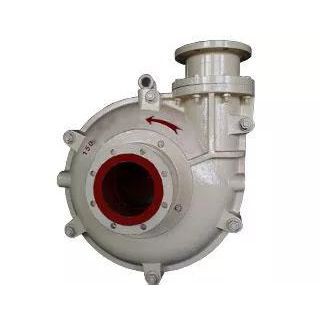

Head (Pressure)
The head of a pump refers to the pressure it can generate to move the slurry. The shape and diameter of the impeller are key factors in determining the head. Radial blades are often used when high head is required, as they can generate a large amount of force. However, as I said before, they may not be as efficient as other blade shapes.
Efficiency
Efficiency is a measure of how well the pump converts the input power into useful work (moving the slurry). A well-designed impeller can improve the pump's efficiency by reducing energy losses due to turbulence and friction. Backward-curved blades are generally more efficient than other blade shapes because they help to minimize turbulence.
Wear Resistance
Since froth slurry can be abrasive, the impeller needs to be able to resist wear. The material used to make the impeller and its design can both affect its wear resistance. High-chrome alloy impellers are known for their excellent wear resistance, but the design of the impeller can also play a role. For example, a well-designed impeller can distribute the wear more evenly across the blades, which can extend the impeller's lifespan.
Solids Handling Capability
Froth slurry often contains solids, so the pump needs to be able to handle these solids without clogging. The impeller design can affect the pump's solids handling capability. A pump with wide passages between the blades and a suitable blade shape can better handle large solids without getting blocked.
In conclusion, the impeller design has a huge impact on the performance of a Froth Slurry Pump. From the number of blades and their shape to the impeller diameter and the material used, every aspect of the design needs to be carefully considered to ensure that the pump can meet the specific requirements of the application.
If you're in the market for a Froth Slurry Pump, it's important to choose a pump with the right impeller design for your needs. We offer a wide range of Froth Slurry Pumps with different impeller designs to suit various applications. Whether you need a pump for handling highly abrasive slurries or for applications that require high flow rates, we've got you covered.
We also offer other types of pumps, such as the Reciprocating Mud Pump, Submersible Sludge Pump, and Sand Slurry Pump. These pumps are designed to meet the specific needs of different industries and applications.
If you have any questions or would like to discuss your pump requirements, feel free to reach out to us. We're here to help you find the best pump solution for your business.
References
- Perry, R. H., & Green, D. W. (1997). Perry's Chemical Engineers' Handbook. McGraw-Hill.
- Karassik, I. J., Messina, J. P., Cooper, P. T., & Heald, C. C. (2008). Pump Handbook. McGraw-Hill.


