

Hey there! As a supplier of Mud Dredge Pumps, I often get asked about how to calculate the pumping distance of these bad boys. It's a crucial question, especially for those in the dredging industry. So, let's dive right in and break it down.
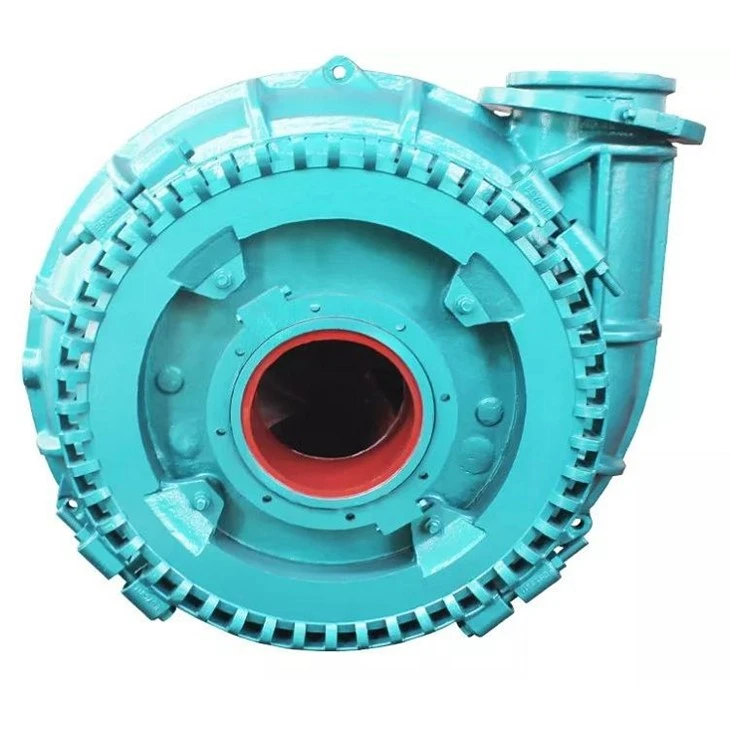
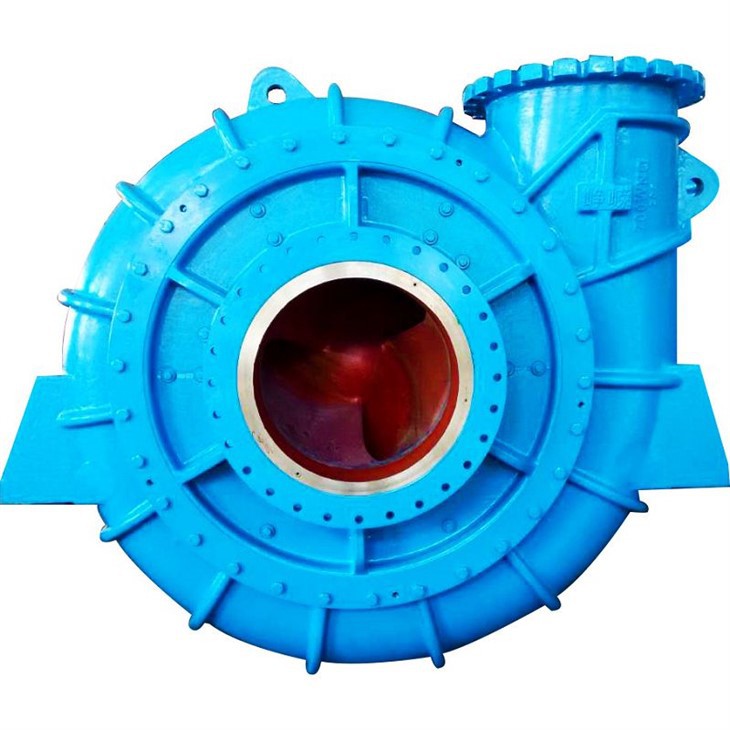
First off, what is a mud dredge pump? Well, it's a specialized pump used to move mud, slurry, or other sediment - laden fluids. These pumps are essential in various applications like dredging rivers, lakes, and ports, as well as in mining and construction projects. You can check out our range of Mud Dredge Pump on our website.
Now, let's talk about the factors that affect the pumping distance.
1. Pump Power and Capacity
The power of the pump is a major player here. A more powerful pump can push the mud further. The capacity, or the volume of mud the pump can move per unit of time, also matters. If you have a high - capacity pump, it can maintain a good flow rate over a longer distance. For example, our Submersible Dredge Pump comes in different power ratings to suit various needs. A higher - powered submersible pump can handle longer pumping distances compared to a lower - powered one.
2. Pipe Diameter and Friction Loss
The diameter of the pipeline through which the mud is pumped is crucial. A larger diameter pipe generally allows for less friction, which means the mud can flow more easily and over a greater distance. Friction loss occurs when the mud rubs against the inner walls of the pipe. The longer the pipe, the more friction loss there will be. To calculate the friction loss, you can use the Darcy - Weisbach equation:
[h_f = f\frac{L}{D}\frac{v^{2}}{2g}]
where (h_f) is the friction loss, (f) is the friction factor, (L) is the length of the pipe, (D) is the diameter of the pipe, (v) is the velocity of the fluid, and (g) is the acceleration due to gravity.
For instance, if you're using a Gravel Pump to pump a mixture of mud and gravel, the friction loss will be higher compared to just pumping mud because of the abrasiveness of the gravel. So, you might need a larger diameter pipe or a more powerful pump to achieve the desired pumping distance.
3. Mud Properties
The properties of the mud itself play a huge role. The density, viscosity, and particle size distribution of the mud can all affect how far it can be pumped. Denser mud requires more energy to move, and highly viscous mud will flow more slowly and experience more friction. If the mud has large particles, it can cause blockages in the pipe, reducing the pumping distance.
Step - by - Step Calculation
Let's go through a simple step - by - step process to calculate the pumping distance.
Step 1: Determine the Pump Head
The pump head is the energy that the pump adds to the fluid. It's usually measured in meters. You can find the pump head from the pump's performance curve, which shows the relationship between the flow rate and the head. For example, if your pump has a head of 30 meters at a certain flow rate, that's the maximum energy it can impart to the mud.
Step 2: Calculate the Total Head Loss
The total head loss includes the friction loss in the pipe (calculated using the Darcy - Weisbach equation) and any other losses like minor losses due to bends, valves, etc. Minor losses can be estimated using coefficients for different types of fittings. Add up all these losses to get the total head loss.
Step 3: Determine the Available Head for Pumping Distance
Subtract the total head loss from the pump head. The remaining head is the available head for overcoming the elevation difference and achieving the pumping distance.
Step 4: Calculate the Pumping Distance
If the mud is being pumped horizontally, the available head is mainly used to overcome friction. You can rearrange the Darcy - Weisbach equation to solve for the length of the pipe ((L)):
[L=\frac{h_f D}{f}\frac{2g}{v^{2}}]
where (h_f) is the available head for friction loss.
If the mud is being pumped vertically, you also need to account for the elevation difference. The available head is used to lift the mud and overcome friction.
Let's take an example. Suppose you have a pump with a head of 25 meters, and the total head loss (including friction and minor losses) is 5 meters. So, you have 20 meters of available head. If the friction factor (f = 0.02), the pipe diameter (D = 0.5) meters, and the velocity (v = 2) m/s, using the rearranged Darcy - Weisbach equation:
[L=\frac{20\times0.5}{0.02}\frac{2\times9.81}{2^{2}}]
[L = 2452.5] meters
This is a simplified example, and in real - world scenarios, you might need to consider other factors like the changing properties of the mud over time and the efficiency of the pump.
Tips for Maximizing Pumping Distance
- Choose the Right Pump: Select a pump with sufficient power and capacity for your specific application. Consider the type of mud and the required pumping distance.
- Optimize the Pipe System: Use the largest diameter pipe possible to reduce friction loss. Minimize the number of bends and valves in the pipeline.
- Monitor and Adjust: Continuously monitor the pump's performance and the properties of the mud. Make adjustments as needed to ensure optimal pumping distance.
In conclusion, calculating the pumping distance of a mud dredge pump is a complex process that involves considering multiple factors. But with the right knowledge and tools, you can accurately estimate the distance and ensure the efficient operation of your dredging project.
If you're in the market for a high - quality mud dredge pump or have any questions about calculating pumping distances, don't hesitate to reach out. We're here to help you make the best choice for your project.
References
- Crane Company. "Flow of Fluids Through Valves, Fittings, and Pipe". Technical Paper No. 410.
- Streeter, V. L., & Wylie, E. B. "Fluid Mechanics". McGraw - Hill.


