

When it comes to the world of dredging and handling abrasive materials, gravel pumps play a pivotal role. As a gravel pump supplier, I understand the diverse needs of our customers and the importance of customization options. In this blog post, I'll delve into the various customization options available for gravel pumps, which can significantly enhance their performance and adaptability to different working conditions.
Material Selection
One of the primary customization aspects of a gravel pump is the choice of materials. The harsh nature of gravel and other abrasive substances means that the pump components need to be made from durable materials. For the pump casing, we offer options such as high - chrome alloy. High - chrome alloy is known for its excellent wear resistance, which can withstand the constant abrasion caused by gravel particles. This material extends the service life of the pump casing, reducing the frequency of replacements and maintenance costs.
The impeller is another critical component. We can customize impellers using materials like rubber or polyurethane in addition to high - chrome alloy. Rubber impellers are great for applications where the pumped medium contains a certain amount of solids but also requires a degree of flexibility. They can handle some shock loading and are less likely to break compared to metal impellers. Polyurethane impellers, on the other hand, offer a balance between wear resistance and flexibility. They are often used in situations where the gravel has a relatively small particle size and the pump needs to operate smoothly.
Pump Size and Capacity
Customizing the size and capacity of a gravel pump is essential to meet specific project requirements. The flow rate and head of the pump can be adjusted according to the volume of material that needs to be pumped and the distance and height it needs to be transported. For small - scale projects, such as pond dredging, a smaller gravel pump with a lower flow rate and head may be sufficient. You can check out our Pond Dredge Pump for more details on pumps suitable for such applications.
In contrast, large - scale industrial projects or river dredging operations may demand a high - capacity gravel pump. These pumps can have a much larger impeller diameter and a more powerful motor to achieve a higher flow rate and head. We can design and manufacture gravel pumps with flow rates ranging from a few cubic meters per hour to hundreds of cubic meters per hour, depending on the customer's needs.
Shaft Seal Options
The shaft seal is crucial for preventing leakage of the pumped medium and protecting the pump's bearings and other internal components. We offer different types of shaft seals for gravel pumps. One of the common options is the mechanical seal. Mechanical seals provide a reliable and efficient way to seal the pump shaft. They are designed to handle high - pressure and high - temperature conditions, making them suitable for demanding gravel pumping applications.
Another option is the gland packing seal. Gland packing seals are more traditional but still widely used. They are relatively easy to install and maintain. Gland packing can be made from various materials, such as asbestos - free packing or graphite - impregnated packing, depending on the nature of the pumped medium. For applications where the gravel pump is handling mud or other viscous materials, the gland packing seal can be a cost - effective choice. You can explore our Mud Dredge Pump to see how different shaft seal options are applied in such scenarios.
Motor and Drive System
The motor and drive system of a gravel pump can also be customized. We can offer different types of motors, including electric motors and diesel engines. Electric motors are commonly used in applications where a stable power supply is available. They are energy - efficient and relatively quiet. The power of the electric motor can be selected based on the pump's requirements, ensuring that the pump operates at its optimal efficiency.
Diesel engines, on the other hand, are suitable for remote locations or areas where there is no access to electricity. They provide a high - power output and are highly mobile. We can match the diesel engine's power to the gravel pump's capacity, so that the pump can work effectively in various environments. Additionally, we can customize the drive system, such as using direct drive or belt drive, depending on the specific installation and operational requirements.

Inlet and Outlet Configurations
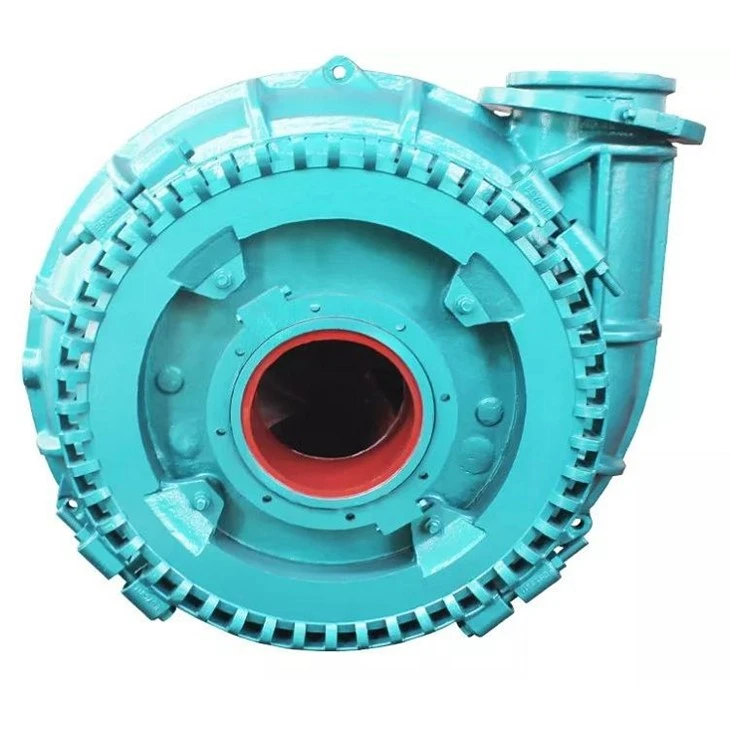
The inlet and outlet configurations of a gravel pump can be tailored to fit different piping systems and project layouts. We can provide different inlet and outlet sizes to match the existing pipelines or to optimize the flow of the pumped medium. For example, in some cases, a larger inlet size may be required to allow for the smooth entry of gravel into the pump, especially when dealing with large - sized gravel particles.
The orientation of the inlet and outlet can also be customized. Some projects may require a horizontal inlet and vertical outlet, while others may need a different combination. This flexibility in inlet and outlet configurations ensures that the gravel pump can be easily integrated into the existing dredging or pumping system.
Wear - Resistance Liners
To further enhance the wear resistance of the gravel pump, we offer wear - resistance liners for the pump casing and other internal components. These liners can be made from materials such as ceramic or high - density polyethylene (HDPE). Ceramic liners are extremely hard and offer excellent wear resistance against abrasive gravel. They are often used in pumps that handle highly abrasive materials.
HDPE liners, on the other hand, are lightweight and have good chemical resistance. They can reduce the friction between the pumped medium and the pump casing, improving the pump's efficiency. Wear - resistance liners can be easily replaced when they are worn out, extending the overall service life of the gravel pump.
Control System
A modern gravel pump can be equipped with a customized control system. The control system can include features such as automatic start - stop, flow rate adjustment, and monitoring of the pump's operating parameters. For example, sensors can be installed to monitor the pressure, temperature, and vibration of the pump. If any abnormal conditions are detected, the control system can send an alarm or even automatically shut down the pump to prevent damage.
We can also provide remote control options for the gravel pump. This is particularly useful for large - scale projects where the pump is located in a hard - to - reach area. With remote control, operators can adjust the pump's settings and monitor its performance from a central control room.
Conclusion
As a gravel pump supplier, we understand that every project is unique, and that's why we offer a wide range of customization options for our gravel pumps. Whether it's material selection, pump size, shaft seal, motor and drive system, or other aspects, we can work closely with our customers to design and manufacture a gravel pump that meets their specific needs.
If you are in the market for a gravel pump and need a customized solution, don't hesitate to contact us for a detailed discussion. Our team of experts is ready to assist you in choosing the right customization options for your project. You can explore our Gravel Pump page to learn more about our standard and customizable products. Let's work together to find the best gravel pump solution for your dredging and material - handling needs.
References
- "Dredging Technology Handbook" by IADC (International Association of Dredging Companies)
- "Pump Handbook" by Igor J. Karassik et al.


