

What are the Electrical Requirements for a Slurry Pump?
As a supplier of pumps used for slurry, I've had the privilege of working closely with various industries that rely on these robust machines. Slurry pumps are designed to handle abrasive and often corrosive mixtures of solids and liquids, making them essential in sectors such as mining, construction, and wastewater treatment. One crucial aspect of ensuring the efficient and reliable operation of a slurry pump is understanding its electrical requirements.
Power Supply and Voltage
The first consideration when it comes to the electrical requirements of a slurry pump is the power supply. Slurry pumps typically require a stable and appropriate voltage source to operate effectively. The voltage requirements can vary depending on the size and type of the pump. Smaller slurry pumps may operate on a standard single - phase voltage, such as 120V or 240V, which is commonly available in residential or small - scale industrial settings.
However, larger and more powerful slurry pumps usually demand a three - phase power supply. Three - phase power is more efficient for high - power applications as it provides a more constant and balanced flow of electrical energy. Common three - phase voltages for industrial slurry pumps include 208V, 480V, or even higher in some large - scale operations.
It's essential to ensure that the power supply at the installation site matches the pump's voltage requirements. Any mismatch can lead to inefficient operation, overheating of the motor, and potentially even damage to the pump. For example, if a pump designed for 480V three - phase power is connected to a lower voltage supply, it may not be able to generate enough torque to operate the impeller properly, resulting in reduced flow and pressure.
Motor Power Rating
The motor power rating is another critical factor in the electrical requirements of a slurry pump. The power rating, usually measured in horsepower (HP) or kilowatts (kW), indicates the amount of electrical power the motor can consume to drive the pump. The appropriate motor power rating depends on several factors, including the pump's flow rate, head (pressure), and the specific gravity of the slurry being pumped.
A higher flow rate and greater head require more power to move the slurry through the system. Similarly, slurries with a higher specific gravity, which means they are denser and more viscous, also demand more power to pump. For instance, a Slurry Pump For Mining that needs to move a thick mixture of ore and water over a long distance and against a high pressure will require a more powerful motor compared to a pump used for a less demanding application, such as transferring a relatively thin slurry in a small - scale wastewater treatment plant.
Selecting the right motor power rating is crucial. If the motor is underpowered, the pump may not be able to achieve the required flow and pressure, leading to reduced productivity. On the other hand, an oversized motor not only increases the initial cost of the pump system but also results in higher energy consumption and operating costs.
Electrical Motor Types
There are different types of electrical motors used in slurry pumps, each with its own characteristics and electrical requirements.
-
Induction Motors: These are the most commonly used motors in slurry pumps. Induction motors are reliable, efficient, and relatively low - cost. They work based on the principle of electromagnetic induction, where the rotating magnetic field in the stator induces a current in the rotor, causing it to rotate. Induction motors can be further classified into single - phase and three - phase types, depending on the power supply.
-
Synchronous Motors: Synchronous motors are used in applications where precise speed control is required. They operate at a constant speed that is directly proportional to the frequency of the power supply. While they offer high efficiency and power factor, they are more complex and expensive compared to induction motors.
-
Direct - Current (DC) Motors: DC motors are less common in modern slurry pump applications but may still be used in some specific situations, such as in areas where a DC power source is readily available or where a high - starting torque is needed.
Control and Protection Systems
In addition to the basic electrical requirements for power supply and motor operation, slurry pumps also need appropriate control and protection systems.
-
Starters: Starters are used to start and stop the pump motor safely. They can be manual or automatic, depending on the application. For larger motors, soft starters are often used. Soft starters gradually increase the voltage applied to the motor during startup, reducing the inrush current and mechanical stress on the pump and motor.
-
Overload Protection: Overload protection devices, such as thermal overload relays, are essential to prevent the motor from overheating due to excessive current. These devices monitor the current flowing through the motor and will trip if the current exceeds a pre - set value, cutting off the power supply to the motor and protecting it from damage.
-
Short - Circuit Protection: Short - circuit protection devices, such as fuses or circuit breakers, are used to protect the electrical system from damage in case of a short - circuit. A short - circuit occurs when there is a low - resistance connection between two conductors, which can cause a large amount of current to flow and potentially damage the motor and other electrical components.
-
Variable Frequency Drives (VFDs): VFDs are increasingly being used in slurry pump applications. A VFD allows for precise control of the motor speed by varying the frequency and voltage of the power supply. This can result in significant energy savings, especially in applications where the pump flow rate needs to be adjusted frequently. For example, in a mining operation where the slurry flow rate may vary depending on the production rate, a VFD can adjust the pump speed accordingly, reducing energy consumption and wear on the pump.
Special Considerations for Different Slurry Pump Types
Different types of slurry pumps may have specific electrical requirements based on their design and application.

-
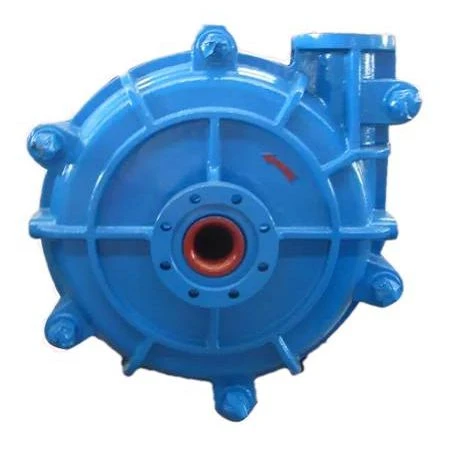
High Head Slurry Pump: High head slurry pumps are designed to generate a high pressure to move the slurry over long distances or to a high elevation. These pumps typically require a more powerful motor to overcome the high resistance and generate the necessary pressure. The electrical system may also need to be more robust to handle the higher power consumption.
-
Froth Slurry Pump: Froth slurry pumps are used to handle frothy mixtures, which can be more difficult to pump compared to non - frothy slurries. The motor of a froth slurry pump may need to provide additional torque to deal with the unique properties of the froth, such as its low density and high compressibility.
-
Submersible Slurry Pumps: Submersible slurry pumps are designed to operate underwater. These pumps require a special electrical enclosure to prevent water ingress and protect the motor. The electrical cables used for submersible pumps also need to be waterproof and have appropriate insulation to ensure safe and reliable operation.
Conclusion
Understanding the electrical requirements of a slurry pump is essential for ensuring its efficient, reliable, and safe operation. From the power supply and voltage to the motor power rating, type of motor, and control and protection systems, every aspect plays a crucial role. As a supplier of pumps used for slurry, we are committed to providing our customers with the right information and products to meet their specific electrical and operational needs.
If you are in need of a slurry pump for your application and want to discuss the electrical requirements in detail, we invite you to contact us. Our team of experts is ready to assist you in selecting the most suitable pump and ensuring that it is properly installed and maintained.
References
- Pump Handbook, Karassik et al.
- Electrical Engineering for Non - Electrical Engineers, Byron J. Johnson.
- Slurry Transport Using Centrifugal Pumps, M. W. Wilson.


