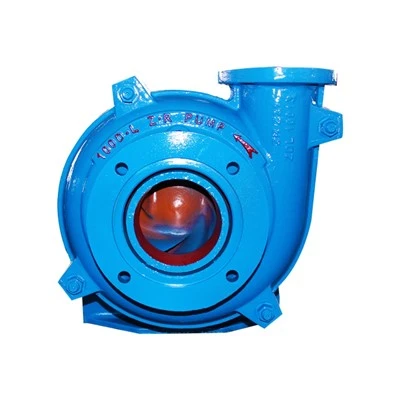
Slurry pumps, as key industrial equipment for conveying high-concentration solid particle and liquid mixtures, play an important role in industries such as mining, metallurgy, power generation, coal mining, and environmental protection. Slurry pumps are classified into various types based on their operating principles, structural forms, and application scenarios, each offering unique performance advantages to meet the needs of different operating conditions.
Based on their operating principle, slurry pumps are primarily divided into centrifugal and positive displacement types. Centrifugal pumps are currently the most widely used type. They use a high-speed rotating impeller to generate centrifugal force, drawing in the slurry and discharging it under pressure. They offer high flow rates and high head, making them suitable for long-distance conveyance of medium- and high-concentration slurries. Positive displacement slurry pumps, such as screw pumps and plunger pumps, rely on the cyclical changes in chamber volume to convey the medium. Their advantages lie in their ability to handle high-viscosity and highly abrasive slurries and their stable flow rate, but they are generally suitable for low flow rates and high head applications.
Based on their structural form, slurry pumps can be divided into horizontal and vertical types. Horizontal slurry pumps offer flexible installation and easy maintenance, making them widely used in conventional applications. Vertical slurry pumps are primarily used in applications where space is limited or submersible installation is required, such as pumping from the bottom of a slurry pool. Despite their compact design, they are relatively difficult to maintain.
Slurry pumps are further categorized into wear-resistant, corrosion-resistant, and high-temperature resistant types based on the characteristics of the pumped medium. Wear-resistant slurry pumps typically utilize high-chromium alloy or rubber liners to withstand the erosion of high-hardness particles. Corrosion-resistant pumps utilize special alloys or plastics for use with corrosive slurries such as acids and alkalis. High-temperature slurry pumps utilize optimized sealing and cooling systems to meet the requirements for stable operation in high-temperature conditions.
Selecting the right slurry pump type is crucial for improving pumping efficiency and reducing maintenance costs. With advancements in industrial technology, the design and materials of slurry pumps are continuously optimized. Their application range will continue to expand, providing more reliable support for efficient production across various industries.