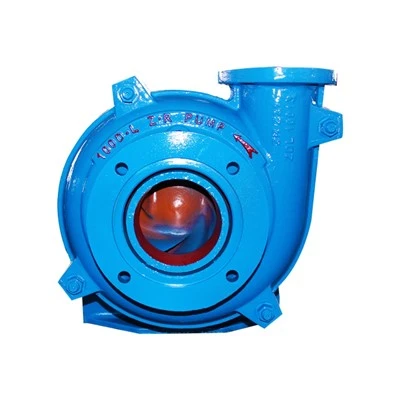
As the core equipment in industrial flue gas purification systems, the design of flue gas desulfurization pumps directly impacts desulfurization efficiency, system reliability, and long-term operating costs.Against the backdrop of increasingly stringent environmental regulations and energy structure transformation, the design of desulfurization pumps must balance efficiency, corrosion resistance, stability, and intelligent requirements, embodying an engineering approach that integrates multidisciplinary collaboration and full-lifecycle optimization. This article explores the core design concepts of modern flue gas desulfurization pumps from the perspectives of functional adaptability, materials science application, structural reliability, and energy efficiency optimization.
Functional Adaptability: A Design Guided by Process Requirements
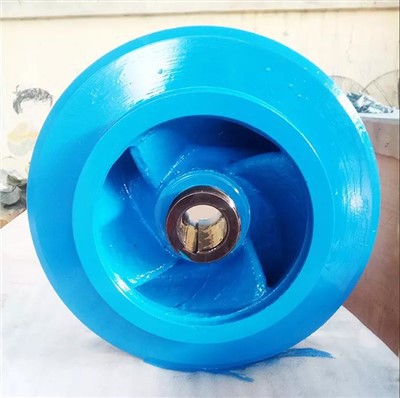
The design of flue gas desulfurization pumps must first precisely match the technical parameters of the desulfurization process. Limestone-gypsum wet desulfurization, the mainstream technology, requires the pump to stably deliver a slurry (primarily composed of limestone particles, gypsum crystals, and water) with a solids content of 10% to 30% under high pressure (typically 1.5 to 6 MPa) and high flow rates (single pump flow rates can reach over 2000 m³/h). Therefore, during the initial design phase, CFD (computational fluid dynamics) simulations are required to optimize the impeller flow path shape to ensure uniform distribution of the slurry during high-speed rotation and avoid wear or cavitation caused by localized turbulence. For example, a backward-curved hyperboloid impeller can reduce axial force by over 20% while improving efficiency by 3%-5%. Furthermore, the pump's sealing system must be customized to the slurry's characteristics. Mechanical seals often use a double-end cartridge design, combined with a flushing fluid circulation system to prevent solid particles from entering the friction pair. For highly corrosive operating conditions, a combination of a packing seal and a mechanical seal is preferred, with buffer injected through an external seal tank for dual protection.
Breakthrough in Materials Science: Synergistic Optimization of Corrosion and Wear Resistance
The highly corrosive nature (pH 4-7) and abrasive nature (solid particle hardness of 5-6 on the Mohs scale) of desulfurization slurry place stringent demands on the durability of the pump material. Traditional designs often use 316L stainless steel for the pump casing and impeller, but this material has limited resistance to chloride ion corrosion and is prone to pitting corrosion in the flue gas environment generated by high-sulfur coal combustion. Modern design concepts are shifting toward the integrated use of multi-component alloys and composite materials. For example, pump casings are constructed from CD4MCu duplex stainless steel (chromium content 24%-26%, molybdenum content 2%-3%), with a pitting resistance equivalent number (PREN) exceeding 40, providing resistance to long-term corrosion from chloride-containing slurries. Impellers are constructed from A49 (a nickel-based alloy containing 6% molybdenum and 4% tungsten), or Stellite 6 alloy (40%-60% tungsten carbide) is welded onto an ordinary stainless steel substrate, significantly enhancing the wear resistance of wetted components. In recent years, the application of ceramic coatings (such as Al₂O₃-TiO₂ composite coatings, 0.3-0.5mm thick) has further reduced maintenance costs. This thermal spraying process forms a dense protective layer on the metal substrate, achieving a hardness exceeding HV1500 and a wear rate only one-eighth that of ordinary stainless steel.
Structural Reliability: Redundant Design and Dynamic Balancing in Engineering Practice
Desulfurization pumps typically require a continuous operating cycle of ≥8,000 hours per year, so structural design must prioritize vibration control and stress concentration. The pump shaft system is integrally forged from high-strength alloy steel (such as 2Cr13Ni4Mo). Finite Element Analysis (FEA) optimizes the shaft diameter to bearing span ratio, setting the critical speed at least 1.5 times the operating speed to minimize resonance risk. Heavy-duty cylindrical roller bearings (such as the NU series) are preferred on the support end to support radial loads, while angular contact ball bearings (such as the 72 series) are used on the non-drive end to support both axial and radial forces, with an automatic self-aligning function to compensate for installation errors. Furthermore, the connection between the pump body and the pipeline utilizes a flexible expansion joint to absorb thermal expansion (ΔL ≤ ±5mm) and reduce stress transfer caused by foundation settlement or temperature fluctuations. Large desulfurization pumps (power ≥500kW) also require an integrated online monitoring module. This module uses a vibration sensor (sampling frequency 10kHz) to collect real-time bearing seat vibration velocity (ISO 10816 standard). Combined with temperature sensor data, it uses a machine learning algorithm to predict mechanical failures, reducing unplanned downtime by over 70%.
Energy Efficiency Optimization and Intelligence: A Technological Extension of Green Manufacturing
Driven by the global "dual carbon" goals, energy-efficient desulfurization pump design has become a core competitive advantage. By optimizing the impeller blade inlet angle (β1 is typically 15°-20°) and outlet angle (β2 is 25°-35°) using ternary flow theory, combined with precise control of the volute diaphragm clearance (δ ≤ 0.5mm), hydraulic efficiency can be increased to 82%-85% (compared to approximately 75% in traditional designs). A more cutting-edge design concept incorporates a permanent magnet synchronous motor (PMSM) direct drive solution, eliminating the reduction gearbox and increasing transmission efficiency from 92% to 97%, while also reducing maintenance complexity. Intelligent design focuses on full lifecycle management: The pump incorporates integrated sensors for multiple parameters, including pressure, flow, and temperature. Data is uploaded to the cloud via the Industrial Internet of Things (IIoT) platform. Using digital twin technology, a virtual model is constructed to simulate performance under different operating conditions in real time, assisting operators in dynamically adjusting operating parameters (e.g., flow adjustment range of 30% to 110%). Some high-end products already utilize AI-based adaptive control algorithms, automatically adjusting pump speed based on flue gas SO₂ concentration changes. This reduces energy consumption by 15% to 20% while maintaining desulfurization efficiency.
Conclusion
The design concept of flue gas desulfurization pumps is essentially a systematic integration of engineering requirements, materials science, manufacturing processes, and intelligent technologies. From functional adaptation to meet basic process parameters to material innovation to address extreme operating conditions; from ensuring long-term structural reliability to energy efficiency upgrades embracing green and low-carbon development, every design detail reflects the core principle of prioritizing reliability and optimizing lifecycle costs. In the future, with the further improvement of environmental protection standards and the deep penetration of Industry 4.0 technology, desulfurization pump design will focus more on modularization, low carbonization and the expansion of autonomous decision-making capabilities, providing more efficient and intelligent solutions for industrial flue gas treatment.