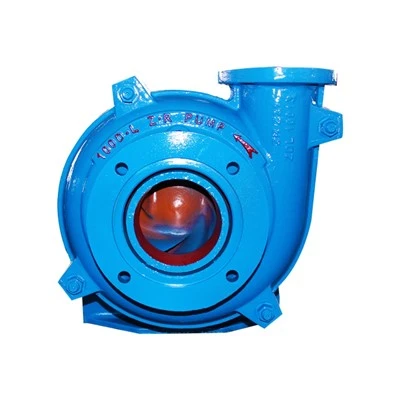
Slurry pumps are critical equipment for conveying high-concentration solid-liquid mixtures in industrial applications. Their performance directly impacts the reliability, efficiency, and economic viability of production systems. In industries such as mining, metallurgy, power generation, coal mining, and the chemical industry, slurry pumps are tasked with efficiently transporting abrasive and corrosive solid-liquid two-phase slurries to designated locations. Their performance not only impacts process continuity but also profoundly impacts equipment lifespan and maintenance costs. This article systematically explores the key factors influencing slurry pump performance, combining their operating principles with actual operating requirements, and analyzes technical approaches to improving performance.
Analysis of Core Performance Parameters of Slurry Pumps
Slurry pump performance is typically described using a set of quantitative indicators. These parameters form the basis for both selection and design and the core basis for evaluating equipment operating status. Flow rate (Q) refers to the volume of slurry delivered by the pump per unit time, measured in m³/h or L/s, and directly determines the system's conveying capacity. Head (H) indicates the energy provided by the pump per unit weight of slurry, measured in meters, reflecting its ability to overcome pipeline resistance and lift height. Power (P) is divided into shaft power (input power) and effective power (output power). The former is the energy transferred from the motor to the pump shaft, while the latter is the energy actually received by the slurry. The two are related through efficiency. Efficiency (η) is the ratio of effective power to shaft power, indicating the economic efficiency of energy conversion. High-efficiency slurry pumps typically have an efficiency of 60%-80%. Net Positive Suction Head (NPSHr) reflects the pump's ability to resist cavitation. The lower this value, the greater the pump's stability under low inlet pressure conditions. Furthermore, due to the unique characteristics of solid-liquid mixed media, wear resistance and corrosion resistance, while not traditional fluid mechanics parameters, are key performance dimensions that distinguish slurry pumps from ordinary centrifugal pumps. They directly impact the service life of slurry pumps in abrasive slurries (such as ore slurry and coal slurry) or corrosive media (such as acidic and alkaline slurries).
Key Factors Affecting Slurry Pump Performance
Slurry pump performance does not exist in isolation, but rather is the result of the synergistic interaction of multiple factors. These factors can be primarily categorized into three categories: design parameters, media characteristics, and operating conditions.
(I) Optimization of Design Parameters
The core of slurry pump design lies in the rationality of the flow path structure. As the core component of energy conversion, the impeller's blade shape (forward curved, backward curved, or radial), inlet diameter, and outlet width directly influence the slurry suction efficiency and energy transfer. For example, while backward-curved blades offer a slightly lower theoretical head, they effectively reduce slurry impact on the blades, minimizing wear and improving efficiency. The clearance design between the impeller and the pump casing (volute) requires a balance between sealing and wear risk. A too small clearance can increase friction due to solid particle accumulation, while an excessively large clearance can lead to leakage and reduce volumetric efficiency. Furthermore, the choice of wear-resistant liner material (such as high-chromium alloy, rubber, or ceramic composites) and the surface finish of the flow path (such as tungsten carbide spraying or polishing) are also key considerations during the design phase. These details directly impact the resistance to slurry flow and the impact of particles on flow components.
(2) Challenges of Media Properties
Slurry pumps handle a mixture of solid particles and water, not a single liquid, whose properties significantly influence performance. The higher the solid particle concentration (usually expressed as mass fraction, with 20%-60% common in industrial applications), the greater the slurry viscosity and flow resistance, resulting in reduced pump head and efficiency. Particle size distribution determines the wear pattern: coarse particles (>1mm) are prone to localized impact wear (such as at the impeller inlet and on the guard plate surface), while fine particles (<0.1mm) may cause suspension wear, accelerating uniform corrosion of the flow path surface. Particle hardness (measured on the Mohs hardness scale) is a key indicator of wear resistance. For example, quartz sand (hardness 7) has a much greater wear resistance against metals than limestone (hardness 3), necessitating the selection of wear-resistant materials with higher hardness. Furthermore, if the chemical properties of the medium (such as pH and salinity) are corrosive (such as acidic ore slurries or chloride-containing wastewater), the corrosion resistance of the material must also be considered (e.g., using stainless steel linings or rubber coatings).
(3) Adaptability to Operating Conditions
In actual operation, the degree to which a pump's operating point (flow rate-head combination) matches its design point directly impacts performance. Long-term operation under low-flow conditions can reduce flow velocity within the pump, potentially leading to solid particle deposition, blockage, or localized wear. Under high-flow conditions, when the head demand exceeds the design value, the motor may overload and cavitation may occur at the impeller inlet. (When slurry pressure falls below the vaporization pressure, bubbles form, and when these bubbles burst, they impact the metal surface, causing spalling.) Furthermore, resistance in the suction line (e.g., excessive elbows or small pipe diameters) can lead to insufficient pump inlet pressure, exacerbating the risk of cavitation. Resistance in the discharge line (e.g., insufficient valve opening or excessively long pipes) requires the pump to provide a higher head, potentially exceeding the rated capacity, ultimately manifesting as reduced flow or motor overheating.
Engineering Practice Paths for Performance Optimization
To meet the demands for efficient and stable operation under complex operating conditions, slurry pump performance optimization requires a coordinated approach involving design improvements, material upgrades, and intelligent control. In terms of design, modern slurry pumps widely utilize a semi-open impeller structure (without a front shroud to facilitate solid particle passage) and a wide volute (to reduce flow resistance and minimize particle deposition). CFD (computational fluid dynamics) simulation technology is also used to optimize the flow path geometry to minimize eddies and localized high-pressure zones. Advances in materials science have promoted the use of high-chromium alloys (such as Cr28), rubber composites (suitable for low-hardness particles), and ceramic coatings (for extremely abrasive conditions). Some high-end equipment even utilizes hard alloy overlay welding (such as tungsten carbide) to create a wear-resistant layer up to 3-5mm thick in key areas. The introduction of intelligent control technology further enhances performance stability. By installing pressure sensors, flow meters, and temperature monitoring modules, these modules collect real-time operating data and feed it back to the control system, automatically adjusting the pump speed (variable frequency drive technology) or valve opening to ensure the operating point remains within the high-efficiency range. These technologies also provide early warnings for abnormal conditions such as cavitation and overheating, extending equipment life.
Conclusion
The performance of slurry pumps embodies the intersection of multidisciplinary technologies. Its core lies in achieving efficient and stable conveying of high-concentration solid-liquid two-phase flows through parameter optimization, material adaptation, and operating condition control. With increasingly stringent industrial demands for energy conservation and consumption reduction, as well as long-term equipment operation, in-depth research on slurry pump performance and the promotion of technological innovation are not only crucial for improving production system reliability but also essential for driving the fluid machinery industry towards intelligent and green development. In the future, with the integrated application of new materials (such as nano-coatings), new processes (such as additive manufacturing), and intelligent algorithms (such as machine learning predictive maintenance), the performance boundaries of slurry pumps will be further expanded, providing more solid equipment support for the sustainable development of industrial production.