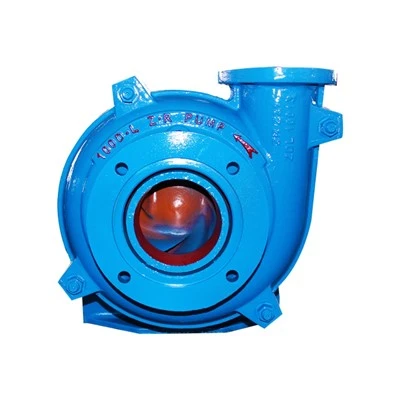
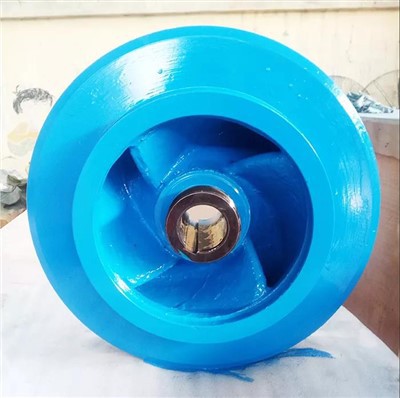
Slurry Pump Wear Resistance is one of the most important indicators for users in mining, metallurgy, power generation, and coal processing when selecting equipment. When handling solid-laden slurries, wetted components continuously withstand particle impact and abrasion. Wear is concentrated at the impeller blade leading edges, back shroud, volute cutwater, and suction side liners, with the cutwater experiencing particularly severe impact erosion due to high-velocity slurry impingement.
Improving Slurry Pump Wear Resistance typically involves two approaches: materials and design. In terms of materials, high-chromium cast iron and Ni-Hard are widely used traditional wear-resistant materials. Ni-Hard offers hardness of 550-650 BHN and performs well under controlled pH conditions, while high-chromium cast iron shows superior performance in wet abrasion environments. In recent years, technologies such as ceramic particle-filled epoxy resin linings, tungsten carbide coatings, and laser cladding with titanium carbide have been increasingly adopted to locally reinforce high-wear zones and extend component life. In design optimization, introducing splitter blades into the impeller significantly improves internal flow structure, dividing large-scale vortices into smaller ones and reducing direct particle impact on blades. This reduces blade wear by approximately 53% and total impeller wear by nearly 30%. Adjusting the blade wrap angle (e.g., from 66° to 96°) can also reduce impeller and volute wear by about 20%.
Overall, improving Slurry Pump Wear Resistance requires coordinated optimization of materials science, hydraulic design, and actual operating conditions. A single measure is often insufficient to address complex abrasive environments.