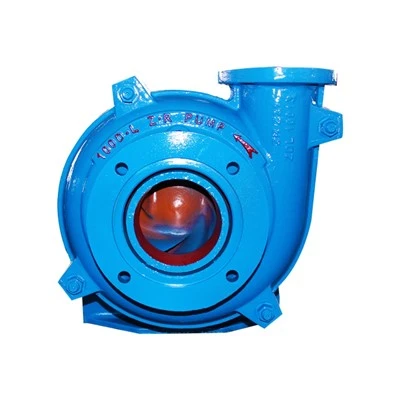
A sewage pump is a fluid machine specifically designed to transport liquids containing solid particles or fibrous materials. It is widely used in municipal engineering, industrial production, and building drainage. Its core function is to lift sewage from low locations to higher locations or transport it over long distances, ensuring the normal operation of drainage systems. The working principle of a sewage pump involves knowledge from multiple disciplines, including fluid mechanics, mechanical transmission, and materials science. Its design and operation must balance efficiency, reliability, and corrosion resistance.
Basic Structure and Classification
The main components of a sewage pump include an impeller, pump casing, motor, sealing device, and inlet and outlet pipes. Based on their operating principles, sewage pumps can be divided into three categories: centrifugal, positive displacement, and screw. Centrifugal sewage pumps are the most common. Centrifugal sewage pumps rely on the centrifugal force generated by a high-speed rotating impeller, which converts kinetic energy into pressure energy to achieve liquid transport. Positive displacement sewage pumps use the reciprocating or rotary motion of components such as pistons, gears, or screws to change the volume of the pump chamber to draw in and discharge sewage. Screw pumps use the rotation of spiral blades to propel sewage forward and are suitable for sewage with high viscosity or containing large particles.
Working Principle of a Centrifugal Sewage Pump
Centrifugal sewage pumps are the most widely used type of pump. Their operation is based on Newton's second law and the principles of fluid mechanics. When the motor drives the impeller at high speed, a low-pressure area forms at the center of the impeller. Sewage, driven by the pressure differential, enters the pump chamber through the inlet. The impeller blades drive the sewage into rotation, causing it to move at high speed along with the impeller. Centrifugal force propels the sewage from the center of the impeller toward the edges, increasing its velocity and kinetic energy. The sewage then enters the diffusion chamber in the pump casing, where the flow rate gradually decreases. Kinetic energy is converted into static pressure, increasing the pressure of the sewage. Ultimately, the high-pressure sewage is delivered to the target location through the outlet pipe.
The key design features of a centrifugal sewage pump lie in the shape of the impeller and the flow path structure of the pump casing. To prevent clogging by solid particles, the impeller is typically open or semi-open, with a wide blade spacing and wear- and corrosion-resistant materials. Furthermore, the pump casing has a smooth inner wall and a well-designed diffusion chamber to reduce fluid resistance and improve energy conversion efficiency.
Working Principle of a Positive Displacement Sewage Pump
Positive displacement sewage pumps draw in and out sewage by periodically changing the volume of the pump chamber. For example, a common rotor pump houses a pair of meshing rotors. As the rotors rotate, the volume of the pump chamber periodically expands and contracts. As the volume of the pump chamber increases, negative pressure forms at the inlet, drawing sewage in. As the volume of the pump chamber decreases, pressure increases at the outlet, forcing sewage out. This type of pump is suitable for sewage with high viscosity or large particles, as its smaller internal clearances effectively prevent particle jamming.
Another type of positive displacement sewage pump is the diaphragm pump, which changes the volume of the pump chamber through the reciprocating motion of a flexible diaphragm. Sewage is located on one side of the diaphragm, while compressed air or hydraulic oil is located on the other. The reciprocating motion of the diaphragm draws in and out sewage. This type of pump lacks mechanical seals and is particularly suitable for transporting corrosive or highly contaminated sewage.
Working Principle of a Screw Pump
The core component of a screw pump is the spiral blade, which propels sewage axially as it rotates. Once sewage enters the pump, it is gradually transported forward by the propulsion of the spiral blade. This type of pump has a simple structure and is suitable for long-distance, low-head conveying. It is particularly well-suited for handling wastewater containing large particles or fibrous materials. The low speed of a screw pump reduces shear forces on the wastewater, minimizing damage to the particle structure.
Key Technologies and Operation and Maintenance
The efficient operation of a sewage pump relies on several key technologies, including anti-clogging design, wear-resistant materials, and sealing technology. To prevent clogging by solid particles, the pump body is often equipped with a cutting device or a screen pre-treatment system. The impeller and pump casing are often made of corrosion-resistant materials such as stainless steel, cast iron, or engineering plastics, and are surface-hardened to extend their service life. Mechanical seals and packing seals are common sealing options, while magnetic drive pumps completely eliminate leakage through a contactless process.
During operation and maintenance, regular inspection of impeller wear, cleaning of filters, and monitoring of motor current are key measures to ensure stable operation of the sewage pump. Furthermore, appropriate pump selection (such as matching the pump model to the flow rate, head, and media characteristics) can significantly improve system efficiency and reduce energy consumption.
Conclusion
As a core component of modern drainage systems, the sewage pump's operating principle integrates the essence of fluid mechanics and mechanical engineering. Centrifugal, positive displacement, and screw-type sewage pumps each have their own unique characteristics, suited to different operating conditions. Through optimized design and scientific maintenance, sewage pumps can maintain long-term stable operation, providing reliable support for sewage treatment, industrial discharge, and municipal engineering. In the future, with the advancement of materials science and intelligent control technology, the efficiency and adaptability of sewage pumps will be further improved, better meeting the drainage needs of complex environments.