As key equipment for conveying high-concentration solid particle and liquid mixtures in the industrial sector, slurry pumps' functional design and technical characteristics directly determine their reliability and efficiency under complex operating conditions. This article systematically explains the basic functionalities of slurry pumps, including their core structural principles, technical features, and typical application scenarios, providing a theoretical basis for understanding the engineering value of this equipment.
I. Basic Functional Definition of Slurry Pumps
The core function of a slurry pump is to efficiently and stably convey solid-liquid two-phase fluids containing solid particles. This type of fluid is commonly referred to as "slurry." It is commonly found in applications such as mining tailings, metallurgical slurries, coal washing wastewater, power ash water, and slurry conveyance in the chemical industry. Unlike ordinary clear water pumps, slurry pumps face two major challenges: wear and impact from solid particles on flow components (such as impellers and guard plates); and increased flow resistance and energy loss caused by high-concentration slurry. Therefore, its basic functions can be broken down into three key points: first, achieving slurry pressure boost and directional conveying through mechanical energy conversion; second, reducing the impact of particle wear on equipment life through structural optimization; and third, maintaining long-term operational stability through sealing and cooling designs.
II. Core Structure and Operating Principle of a Slurry Pump
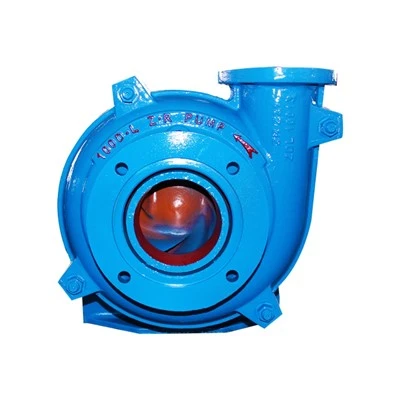
The functionality of a slurry pump relies on its targeted structural design. Its core components include the impeller, pump casing (volute), guard plate, shaft seal, and bearing assembly, all of which work together to accomplish the slurry conveying task.
(I) Impeller: The Core of Energy Conversion
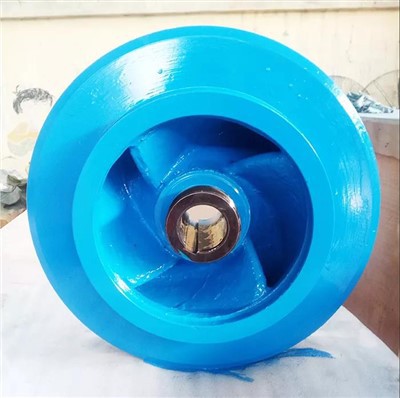
The impeller is the power source of a slurry pump. It typically adopts a closed or semi-closed structure (with blades enclosed between front and rear covers) and is typically made of high-chromium alloy (such as Cr26, Cr28) or rubber-coated (for low-hardness particle conditions). When the motor drives the pump shaft, the impeller blades drive the slurry into high-speed rotation. Centrifugal force converts the slurry's kinetic energy into pressure energy. Slurry near the center gains tangential velocity due to the blades' motion. After leaving the impeller, it enters the diffusion chamber of the pump casing, where the flow rate decreases and the pressure increases, thereby achieving pressurized conveying of the slurry.
(2) Pump Casing and Guard Plate: Flow Guidance and Wear Protection
The pump casing typically features a spiral volute structure, with a gradually expanding inner surface to guide the smooth diffusion of the slurry and convert kinetic energy into static pressure. The guard plate (also known as a wear plate) is installed in the gap between the pump casing and the impeller. It comes into direct contact with high-speed particles and requires a material with high hardness and impact resistance (such as hard alloy overlay or composite ceramic) to protect the pump casing from direct wear by particles. The gap between the impeller and the guard plate must be precisely controlled (typically 1-3mm). Excessive clearance increases backflow losses, while too small a clearance exacerbates friction and wear.
(3) Shaft Seals and Bearings: Ensuring Operational Stability
If slurry pumps leak into the bearing cavity, lubrication failure and equipment corrosion can occur. Therefore, shaft seal design is crucial. Common shaft seal types include packing seals (which prevent leakage by compressing the packing and are suitable for low-pressure conditions), mechanical seals (which achieve zero leakage by engaging the end faces of dynamic and static rings and are suitable for high-pressure, highly corrosive slurries), and impeller dynamic seals (which use back vanes to generate reverse pressure to balance slurry pressure; this is a simple structure but depends on the rotational speed). The bearing assembly must withstand both radial and axial loads on the pump shaft and typically utilizes heavy-duty bearings and is equipped with a cooling and lubrication system to ensure long-term, continuous operation.
III. Key Technical Features of Slurry Pumps
Compared to conventional pumps, the functional foundation of slurry pumps is built on the following technical features:
1. High Wear Resistance: By selecting wear-resistant materials (such as high-chromium cast iron and rubber composites) or surface enhancement processes (such as cladding and spraying), the service life of flow-through components is extended. The impeller life of some high-end slurry pumps can reach 8,000-12,000 hours.
2. Anti-Clog Design: A large impeller inlet diameter and wide flow path prevent the accumulation of large slurry particles at the inlet. Some models utilize an open impeller structure to further reduce the risk of clogging.
3. Adaptable to Complex Working Conditions: The material and sealing type can be adjusted based on the slurry properties (such as particle size, density, and pH value). For example, stainless steel or plastic linings can be used when conveying highly corrosive slurries, and cooling jackets can be added when conveying high-temperature slurries.
IV. Analysis of Typical Application Scenarios
The functional value of slurry pumps is particularly prominent in the following industrial scenarios:
•Mining Industry: Used to transport beneficiation plant tailings (containing metal particles such as iron and copper) or concentrate slurry (high-concentration metal hydroxides), requiring pumps with high head (50-150 meters) and strong wear resistance.
•Power Industry: In the ash handling system of coal-fired power plants, slurry pumps are responsible for transporting ash water (containing fine fly ash particles) to the ash storage, requiring both blockage prevention and corrosion resistance.
•Metallurgical Industry: Steel mills rely on slurry pumps for recycling slurries containing iron filings and impurities, such as blast furnace gas scrubber water and converter sludge.
•Chemical Industry: Transporting reaction slurries containing catalyst particles or sludge concentrate in wastewater treatment requires pumps that can withstand acid and alkali corrosion and temperature fluctuations.
Conclusion
The functional foundation of a slurry pump is essentially "solving wear, blockage, and energy efficiency issues in solid-liquid two-phase flow transportation through the coordinated design of structure, materials, and processes." Its technological development has consistently focused on extending service life, reducing maintenance costs, and adapting to a wider range of operating conditions. It is an indispensable foundational equipment in modern industrial processes. A thorough understanding of its functional principles facilitates rational selection and optimized operation in engineering practice, thereby improving the reliability and cost-effectiveness of the overall system.